Funny Skull Illustration Review for Real Embroidery
When I first opened the folder containing the Funny Skull Illustration, my initial reaction was a mix of skepticism and intrigue. In the world of machine embroidery, skulls are a common motif, but they often fall into two traps: either they look too menacing for everyday wear or they appear so generic that they lack any real character. This design immediately broke that mold. It feels like a playful nod to Halloween without being overwhelming, making it an excellent candidate for a variety of handmade products ranging from children's clothing to boutique accessories.
The file package arrived as a comprehensive zip containing PNG, JPG, EPS, and SVG formats at a robust 5000 px resolution with 300Dpi. As a designer who frequently bridges the gap between digital graphics and physical stitching, having vector files (EPS and SVG) is a game-changer. It allows for precise scaling before converting the artwork into a stitch file, ensuring that the final embroidery project retains its intended personality regardless of the garment size.
Visual Personality and Mood Assessment
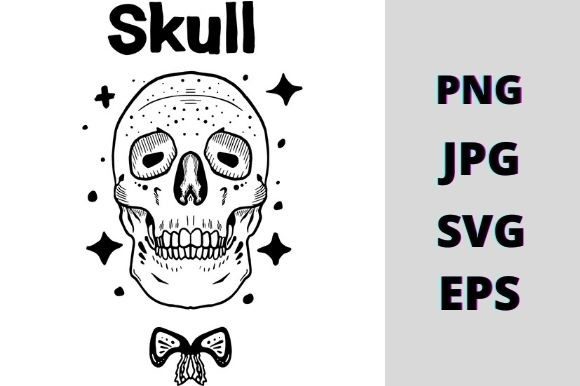
The Funny Skull Illustration exudes a lighthearted energy. Unlike traditional gothic skull designs that rely on heavy fill stitches and dark aesthetics, this piece seems to lean towards clean lines and approachable shapes. The visual personality suggests a design that belongs in a craft fair booth or a trendy Etsy shop rather than a biker club patch. The layout appears balanced, which is crucial when translating a flat graphic into three-dimensional thread.
In terms of mood, it strikes a chord with modern humor. It is quirky enough to be conversation-starting but safe enough to be worn by a wide demographic. This versatility is rare in the Graphics category, where many designs are niche. The illustration's "funny" aspect implies that it likely features exaggerated expressions or stylized elements that would translate well into satin stitch outlines, creating a crisp edge that defines the character against the fabric texture.
Real-World Application: A Custom Tote Bag Scenario
To truly understand how this design performs, let us imagine a specific scenario. Suppose you are a small business owner preparing a custom embroidered tote bag for a local holiday market. You want something that appeals to both kids and adults, perhaps for a gift set involving tea towels and kitchen aprons. You decide to test the Funny Skull Illustration on a canvas tote.
Upon placing the design on the fabric, the first thing you notice is how the negative space interacts with the weave. If the original vector has open areas, those will show through beautifully on the canvas, creating a textured look. However, if the design relies heavily on dense fill stitches, you must ensure the canvas can support the weight without puckering. The 5000 px resolution ensures that even if you need to scale the image up for a large promotional banner, the details remain sharp.
Imagine the customer receiving this bag. The bright, friendly skull adds a pop of personality that elevates a simple tote from a basic utility item to a statement piece. This kind of handmade product differentiation is exactly what drives sales in competitive markets. The design acts as a brand asset; customers might start associating that specific skull style with your shop, building recognition over time.
Performance Across Different Garments and Surfaces
The versatility of this design extends beyond totes. When considering custom apparel like sweatshirts or t-shirts, the Funny Skull Illustration fits naturally on the chest area or the back yoke. For sweatshirt embroidery, the slightly thicker fabric provides a stable base, allowing the stitches to sit proud and distinct. The design's clarity is key here; if the lines are too thin, they might get lost in the fleece texture, but the vector nature of the source file means you can adjust line weights during digitization to ensure visibility.
For baby embroidery, such as onesies or bibs, the "funny" aspect is particularly valuable. Parents often avoid scary imagery for their little ones, but a cute, stylized skull offers a unique aesthetic without the creepiness. It works perfectly for themed birthday parties or seasonal gifts. Similarly, for holiday embroidery projects like Christmas stockings or Valentine's Day cards, this design offers a twist on traditional motifs, appealing to buyers looking for something unconventional.
However, not every surface is suitable. When thinking about embroidered patches or items that require frequent washing, such as work aprons, you must consider the durability of the stitch density. If the design includes tiny, intricate details, these might fray over time after multiple wash cycles. In such cases, simplifying the design or reinforcing the edges becomes necessary. For caps and hats, the curvature of the fabric presents a challenge. A design that looks perfect on a flat screen might distort if not properly adjusted for the curve, so testing on a scrap piece of the actual hat material is essential before committing to a full production run.
Critical Considerations for Designers
Before hitting the "start" button on your embroidery machine, there are several practical steps to ensure success with the Funny Skull Illustration. First, always check the stitch density. High-density areas can cause the fabric to pucker, especially on thin materials like t-shirts or sheer fabrics. If you plan to use this on a textured fabric like denim or linen, you may need to increase the underlay stitches to create a smooth foundation.
Thread color selection is another critical factor. The contrast between the thread and the fabric determines whether the design pops or disappears. On dark fabric, light threads will make the skull stand out, while on white fabric, darker threads provide definition. If you are using the design for commercial embroidery projects, you should also verify the licensing terms regarding the use of the vector files. Even though the product description mentions easy editing, commercial rights vary, and assuming you can sell finished goods without checking could lead to legal issues.
Another vital step is testing the design in black and white mockups. Sometimes, colors can mask structural flaws in the design. By viewing the skeleton of the design, you can spot potential issues with spacing or alignment that might not be obvious in full color. Additionally, inspect the small details closely. Are there any isolated dots or tiny lines that might break during the hooping process? These weak points can ruin the entire piece if the thread snaps.
Maximizing Value and Customer Trust
Using a well-executed design like this one directly impacts the perceived value of your finished product. Customers pay for quality, and a clean, professional-looking embroidery job signals that care was taken in the creation process. Whether you are listing an item on Etsy or selling at a craft fair, the visual appeal of the design is often the first thing that catches the eye. A poorly executed skull design can make a product look cheap, whereas a well-stitched Funny Skull Illustration suggests premium craftsmanship.
This design also enhances the giftability of your items. Personalized gifts often require a balance of sentiment and style. A funny, approachable skull can serve as a great inside joke or a shared interest between friends, making it a thoughtful choice for birthdays, anniversaries, or just because moments. It transforms a standard item into a memorable keepsake.
Ultimately, the decision to use the Funny Skull Illustration comes down to your specific needs and the target audience. If you are a crafter looking to add a bit of edge to your portfolio, or a small shop owner aiming to diversify your inventory, this design offers a solid foundation. Just remember to test thoroughly, respect the limitations of the fabric, and maintain high standards in your finishing touches. With the right execution, this illustration can become a staple in your collection of design assets.